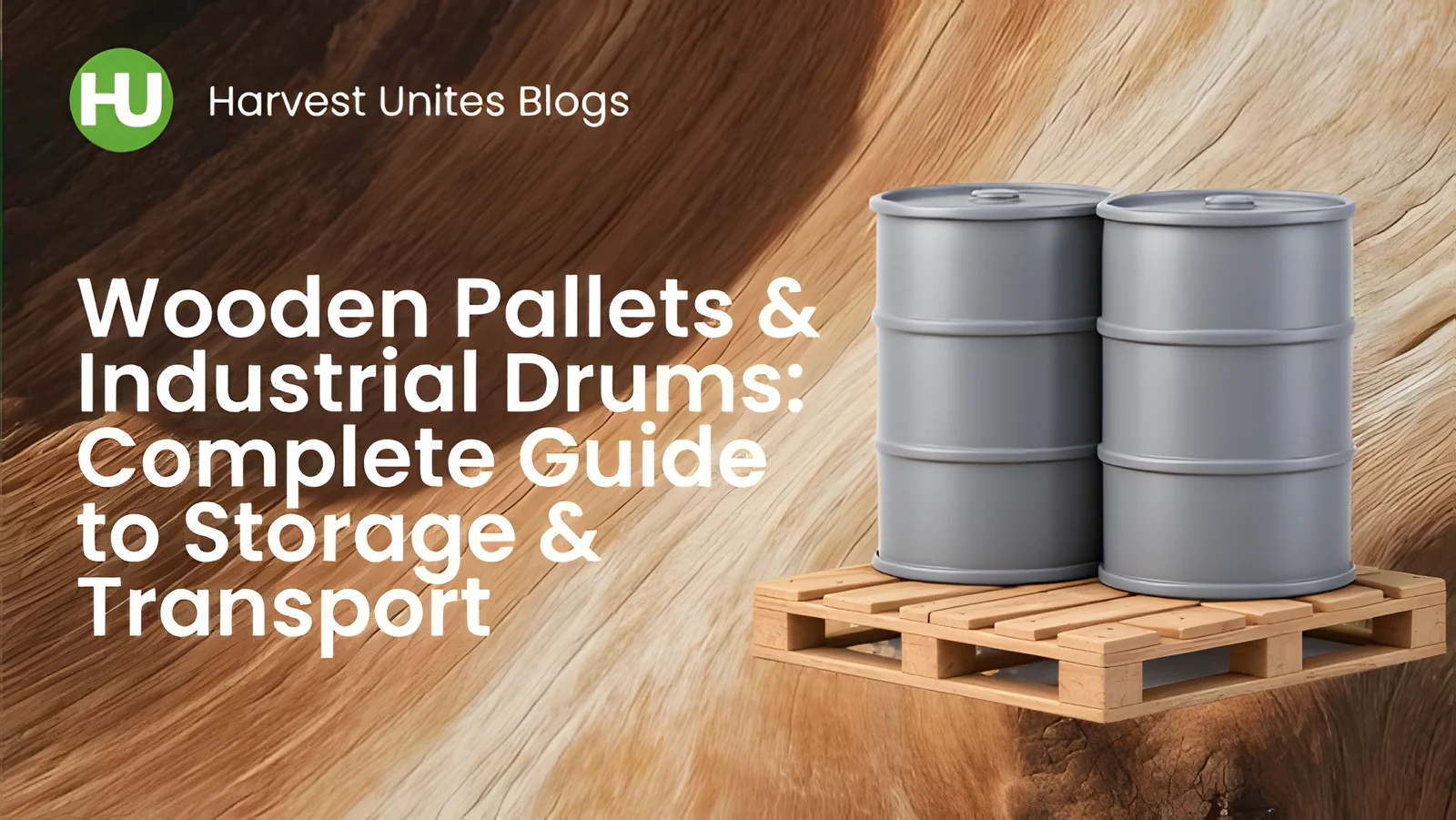
Wooden pallets and industrial drums are two of the most common items in any factory, warehouse or logistics yard. Drums hold liquids, chemicals, oils and powders; pallets form the base that lets forklifts move them safely. When they are chosen and handled correctly, operations run smoothly. When they are not, the result can be spills, damaged stock, injuries and rejected shipments.
This complete guide covers the types of wooden pallets and industrial drums available, how to stack and secure them, safe handling practices, and a practical inspection checklist for Malaysian businesses.
Understanding Wooden Pallets
A pallet is a flat transport structure that supports goods while they are lifted by a forklift, pallet jack or crane. Wooden pallets remain the most widely used type because they are strong, repairable, economical and easy to source.
Two-Way vs Four-Way Entry
- Two-way pallets allow forklift tines to enter from two opposite sides only. They are simple and strong but less flexible in tight spaces.
- Four-way pallets allow entry from all four sides, making loading and unloading faster in busy warehouses and containers.
Common Sizes
Pallet dimensions vary by region and industry. Widely used sizes include 1200 × 1000 mm, 1200 × 800 mm and 1100 × 1100 mm. Choose a size that matches your racking, container dimensions and the footprint of your drums or bags to avoid overhang.
Heat-Treated Pallets for Export
If your goods are exported, wooden pallets usually need to comply with ISPM 15, the international standard for wood packaging material. Compliant pallets are heat-treated to eliminate pests and carry an official stamp. Using untreated pallets for export can lead to shipments being held or rejected at the destination port.
Wooden vs Plastic Pallets
- Wooden pallets: lower upfront cost, repairable, high friction for stable loads.
- Plastic pallets: hygienic, moisture-resistant, consistent in weight and ideal for food, pharmaceutical or closed-loop systems.
Understanding Industrial Drums
Industrial drums are cylindrical containers, most commonly around 200 to 220 litres, used for storing and transporting bulk liquids and solids.
Plastic (HDPE) Drums
High-density polyethylene drums are lightweight, rust-proof and resistant to many acids, alkalis and corrosive chemicals. They are commonly used for detergents, food ingredients, water treatment chemicals and agricultural liquids.
Steel Drums
Steel drums offer high strength and are suited to oils, solvents, paints and flammable products. Some are lined internally to protect sensitive contents.
Closed-Head vs Open-Head
- Closed-head (tight-head) drums have a fixed lid with small bung openings. They are best for liquids and reduce the risk of leaks.
- Open-head drums have a removable lid secured with a clamp ring. They are ideal for powders, pastes, granules and viscous materials that need wide access.
For hazardous goods, always confirm that the drum is UN-rated and approved for the specific substance you are transporting.
Safe Stacking of Drums on Pallets
The most common way to move drums is four to a pallet. Follow these practices for stable, safe loads:
- Choose the right pallet: it should be strong enough for the combined weight and large enough that drums do not hang over the edges.
- Position drums evenly: place drums upright in a square pattern with the weight spread evenly across the deck boards.
- Keep bungs and lids secure: check that every closure is tight before moving.
- Secure the load: use stretch wrap, strapping or drum bands so drums move as one unit.
- Limit stacking height: only stack pallets of drums if the drums are designed for it, and use a board or second pallet between layers.
- Never stack on damaged pallets: broken boards or blocks can collapse under load.
Handling with Forklifts and Pallet Jacks
Most pallet and drum accidents happen during movement. Reduce the risk by following good handling practice:
- Insert forks fully and evenly under the pallet before lifting.
- Travel with the load low and tilted slightly back.
- Drive slowly around corners and on ramps.
- Use drum grabs or clamps for moving individual drums.
- Never roll full drums over long distances or allow them to drop from lorries.
- Ensure only trained and authorised operators use forklifts.
Storage Conditions That Protect Your Stock
Where and how you store pallets and drums has a direct impact on their lifespan and on workplace safety.
For Wooden Pallets
- Store under cover to prevent rain from warping or rotting the wood.
- Keep stacks at a stable height and away from ignition sources.
- Separate damaged pallets for repair or disposal.
For Drums
- Store in a shaded, ventilated area, as heat can cause pressure build-up.
- Use bunded areas or spill pallets for chemicals and oils to contain leaks.
- Segregate incompatible chemicals and label every drum clearly.
- Keep aisles clear for forklift access and emergency response.
Inspection Checklist
A quick routine inspection prevents most accidents. Check the following before every use:
Pallets
- No cracked, split or missing boards
- No protruding nails or loose blocks
- No signs of rot, mould or chemical contamination
- Correct ISPM 15 marking for export shipments
Drums
- No dents, bulges, cracks or rust
- Bungs, gaskets and lids fitted correctly
- Clear, accurate labelling of contents and hazards
- No residue or leaks on the outside of the drum
When to Use IBC Tanks Instead
If you regularly move large volumes of liquid, IBC tanks (intermediate bulk containers) may be more efficient than drums. A standard IBC holds around 1,000 litres in a single unit with an integrated pallet base, which reduces handling time, saves floor space and simplifies filling and discharge through a bottom valve. Many businesses use drums for smaller or mixed batches and IBCs for high-volume products.
Frequently Asked Questions
How many drums fit on one pallet?
Four standard 200 to 220 litre drums usually fit on a 1200 × 1000 mm pallet. Always check the pallet's rated load against the total weight of the filled drums.
Do I need heat-treated pallets for local deliveries?
ISPM 15 heat treatment is mainly required for international shipments. For domestic deliveries within Malaysia it is usually not mandatory, but some customers may still request it.
Can used drums be reused for different products?
Only if the drum has been properly cleaned or reconditioned and the new product is compatible with the previous contents. Never reuse drums that held hazardous chemicals for food or feed.
Key Takeaways
Wooden pallets and industrial drums work best as a system. Choose pallets sized and treated for your application, select drums built for the contents they carry, and follow consistent stacking, handling and inspection routines. These simple steps protect your goods, your workers and your customers while keeping your logistics running efficiently.
Whether you need new pallets, reconditioned drums or advice on moving from drums to IBC tanks, a knowledgeable local supplier can help you match the right equipment to your operation.