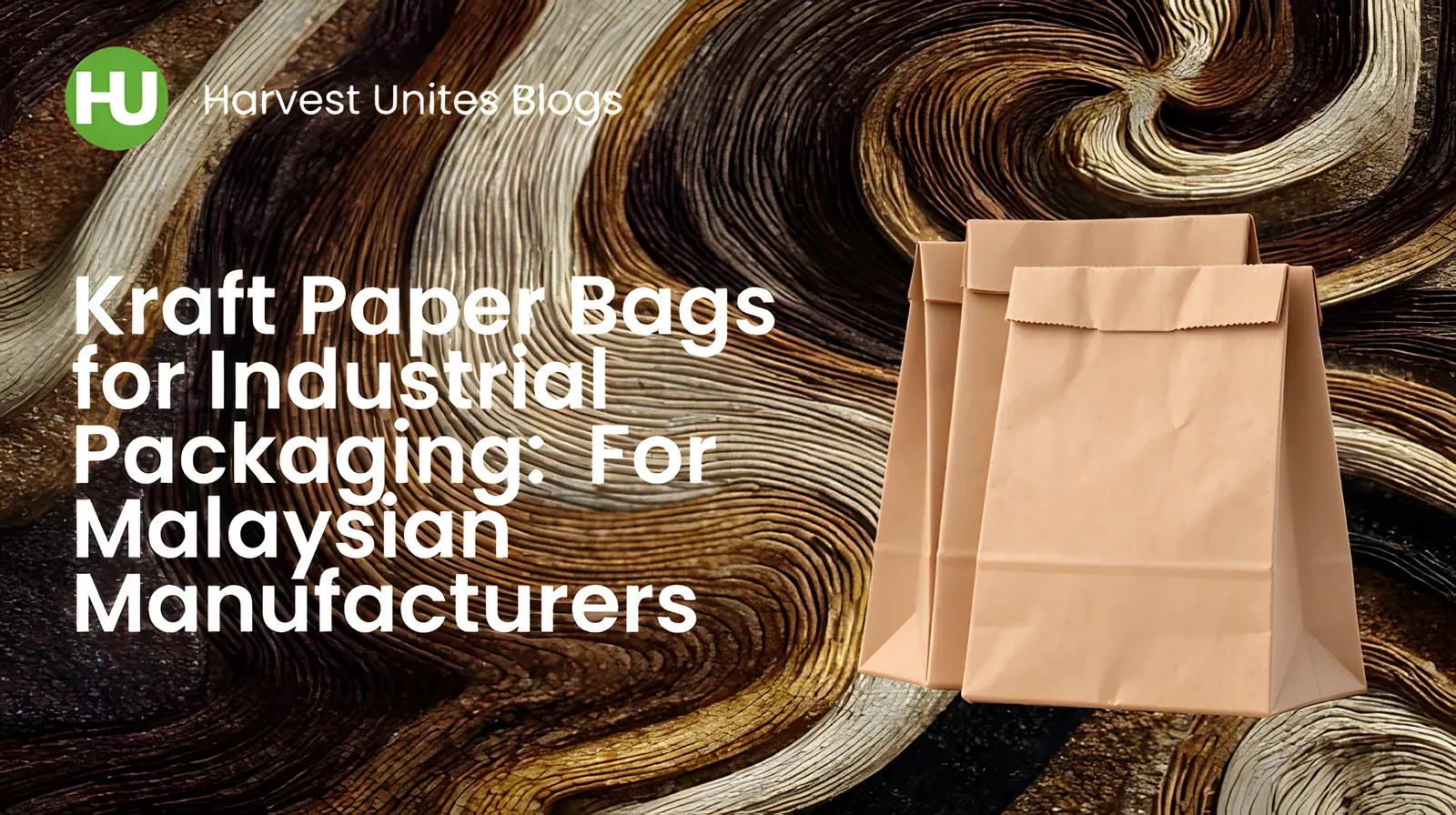
Walk through almost any flour mill, feed store, hardware shop or chemical warehouse in Malaysia and you will find brown paper sacks stacked on pallets. Kraft paper bags carry flour, sugar, animal feed, cement, mortar, mineral powders and charcoal from the factory to the customer, and they have done so for decades. They are strong for their weight, easy to print, simple to fill and recyclable after use, which is why so many manufacturers keep coming back to them.
Paper is not the right answer for every product, though. Malaysia's heat, humidity and sudden rain can weaken a paper sack that would perform perfectly in a drier climate, and some products are simply better suited to PP woven or laminated bags. This guide explains how industrial kraft paper bags are built, the main construction options, where paper works well and where it struggles, how to store and handle paper sacks in local conditions, and how to choose between new and used bags, so you can specify the right bag for your product and your filling line.
What Is an Industrial Kraft Paper Bag?
Kraft paper is a strong paper made mainly from wood pulp. The pulping process keeps long fibres in the paper, which gives it good tensile strength and tear resistance for its weight. Industrial sacks are usually left in their natural brown colour, which is why most people simply call them brown paper bags.
The kraft paper bags supplied by Harvest Unites from our Ipoh warehouse are made to the following specifications:
- Material: high-tensile virgin kraft paper, in single or multi-ply construction
- Colour: natural kraft brown, with custom printing available
- Sizes: customisable, with common sizes of 20"×30", 22"×34" and 26"×40"
- Structure: open top or valve top, with a stitched or heat-sealed bottom
- Variants: natural kraft and brown kraft
- Condition: new and used
These common sizes are the same as the standard sizes used for PP woven bags, which makes it easier to compare the two materials directly or to switch between them for different products on the same line.
Common Industrial Uses in Malaysia
Kraft paper bags are best suited to dry, free-flowing or granular products that are packed, stacked and delivered under cover. Typical applications include:
- Flour, sugar and food ingredients: bakeries, food processors and distributors use paper sacks for dry ingredients that need a clean, natural-looking package.
- Animal feed and pet food: printed paper bags carry the brand, feeding instructions and product details on a surface that is easy to read.
- Cement, mortar and tile adhesive: building materials are often packed in valve-top paper sacks that can be filled quickly on automatic lines.
- Chemicals and mineral powders: fine dry powders such as fillers and minerals are commonly packed in multi-ply paper sacks.
- Charcoal and garden products: charcoal, potting materials and other garden goods suit sturdy paper bags that look natural on a retail shelf.
What these products have in common is that they are dry when packed and stay mostly indoors until they are used. When a product is wet, very heavy, sharp-edged or likely to sit outdoors, other packaging is usually the better choice, as we explain later in this guide.
Single-Ply vs Multi-Ply Construction
The number of paper layers, or plies, is one of the most important choices when specifying a kraft paper bag. A single-ply bag uses one layer of paper. A multi-ply bag, sometimes called a multi-wall sack, uses two or more layers formed together into one bag.
As a general guide:
- Single-ply bags suit lighter fills, smaller packs and products that are handled gently. They are lighter and use less paper.
- Multi-ply bags give extra strength for heavy fills. If one layer is scuffed or nicked, the other layers continue to hold the product.
- Heavier and denser products, such as cement, mortar and mineral powders, generally need more plies than light products such as some food ingredients.
- Rough handling, long delivery routes and repeated loading and unloading all point towards a multi-ply bag.
There is no single correct number of plies for every product. The right construction depends on the fill weight, the nature of the product, how the bag is filled and how far it travels. The most reliable way to decide is to describe your product and handling to your supplier, then trial a small quantity on your own line before placing a large order.
Open-Top vs Valve-Top Bags
The top of the bag determines how it is filled and closed, so it should match your filling equipment.
- Open-top bags: the bag is open across its full width. It is filled from above, either by hand, with a simple scoop or from a filling spout, and then closed by stitching, folding or sealing. Open-top bags suit manual filling, smaller production runs and a wide range of products.
- Valve-top bags: the bag is closed at both ends except for a small sleeve, or valve, at one corner. A filling spout is inserted into the valve, the product is blown or augered in, and the valve closes as the bag is filled. Valve bags suit automatic filling of fine powders such as cement, mortar and tile adhesive.
Valve bags can speed up filling and reduce the need to close each bag by hand, but they work best with the right filling machine. Open-top bags are more flexible and are often the practical choice for smaller manufacturers or for products packed by hand. If you are unsure, start with what your current line can handle and talk to your supplier before changing equipment.
Stitched vs Heat-Sealed Bottoms
The bottom closure is just as important as the top, because it carries the full weight of the product whenever the bag is lifted or stacked.
- Stitched bottom: the bottom is sewn closed, often with a folded paper strip for extra strength. Stitching is a simple and familiar closure that suits many granular products and works well with open-top bags.
- Heat-sealed bottom: the bottom is sealed rather than sewn, so there are no needle holes. This can help with fine powders that might otherwise escape through stitch holes, and it gives a neat, clean appearance.
Choose the bottom based on your product and your line. Very fine powders and products where dust leakage is a concern generally benefit from a sealed closure, while coarser products are often packed perfectly well in stitched bags. Whichever you choose, check a few filled bags carefully for leaks along the seams during your first trial.
Printing and Branding
One of the great strengths of kraft paper is its printable surface. A printed paper sack works as both packaging and advertising, especially for feed, pet food, charcoal and food ingredients that are sold through shops and distributors.
When planning a printed bag, think about the following:
- Essential information first: product name, net weight, batch or date code, and your company name and contact details should be clear and easy to find.
- Usage and safety instructions: for cement, chemicals and powders, include handling and storage advice, and any warnings your product requires.
- Simple, bold artwork: designs with strong contrast are easier to read on natural brown paper and remain legible after the bag is handled.
- Space for batch marking: leave a clear area for stamping or labelling batch details on the filling line.
- Plain bags for internal use: if the bags never reach a customer, unprinted bags are a sensible way to keep costs down.
Share your artwork, bag size and quantity with your supplier when you enquire, so that they can confirm what is possible before production.
Moisture, Humidity and When Paper Is Not Enough
Paper and water do not mix well. In Malaysia's hot, humid climate, kraft paper bags can absorb moisture from the air, and a sudden downpour during loading can soak a stack of sacks in minutes. Damp paper loses strength, and moisture-sensitive products such as flour, sugar and cement can clump or harden inside the bag.
Kraft paper suits dry products and eco-conscious branding, while PP woven bags offer better moisture and tear resistance for rough handling and outdoor storage. Consider moving away from plain paper when:
- Bags may be stored outdoors or in open sheds: exposure to rain and humidity is the biggest risk for paper sacks.
- Handling is rough: sharp edges, dragging across floors and repeated loading can tear paper more easily than woven polypropylene.
- The product itself is damp or oily: moisture from inside the bag weakens the paper just as much as rain from outside.
- The product is highly moisture-sensitive: fertiliser, sugar, flour and fine powders may need extra protection in humid conditions.
There are several alternatives. PP woven bags resist tearing and moisture better than paper and are available in the same common sizes. Laminated PP woven bags add a PP film coating for moisture and dust resistance, which makes them a good fit for fertiliser, sugar, flour and fine powders. An inner plastic liner inside a paper or woven bag can also add a moisture barrier where your product needs it. Our guide to PP woven bag types and uses explains these options in more detail. For very large quantities of dry bulk material, a one-ton jumbo bag may replace many small sacks altogether.
Storage and Handling Best Practices
Good storage protects both the empty bags waiting to be filled and the filled bags waiting to be delivered. A few simple habits make a big difference in Malaysian conditions:
- Keep paper off the floor: store bags on pallets so that they are not sitting on damp concrete or in standing water after heavy rain.
- Store under a roof: keep both empty and filled bags indoors, away from open doors and leaking roofs, and cover stacks if they must wait near a loading bay.
- Allow airflow: leave space between stacks and walls so that humid air does not collect around the paper.
- Use stock in rotation: use older empty bags first, so that paper does not sit for long periods absorbing moisture.
- Stack neatly and squarely: interlock layers on the pallet for stability, and avoid stacking so high that the bottom bags are crushed.
- Lift, do not drag: dragging paper sacks across the floor wears through the outer ply and weakens the bag.
- Protect loads in transit: cover lorries with a tarpaulin and wrap pallet loads where needed, so that sudden rain does not reach the paper.
The choice of pallet matters too. A sturdy, clean pallet with smooth top boards prevents splinters and nails from piercing the bottom layer of sacks. Our guide to wooden pallets and industrial drums covers pallet inspection, stacking and forklift handling in more detail.
Recyclability, New vs Used, and Choosing the Right Bag
Kraft paper is recyclable, which is one reason many manufacturers choose it for products sold to environmentally conscious customers. Clean, empty paper sacks can be collected with other paper waste, and a natural brown bag communicates that message on the shelf. Bags that are heavily contaminated with chemicals, cement or food residue should be handled according to your local waste and recycling arrangements. For a wider view of how packaging choices affect your environmental footprint, read our article on sustainable industrial packaging in Malaysia.
Harvest Unites supplies both new and used kraft paper bags. As a general rule:
- New bags are the right choice for food ingredients, feed, retail products and printed branded packaging, where cleanliness and appearance matter.
- Used bags can be a cost-effective option for non-food internal transfers, construction materials, waste collection and other uses where the bag never reaches a customer, provided the bags are sound and their previous contents are compatible.
- Never reuse bags for food if they previously held chemicals, cement or any non-food product.
To choose the right bag for your product, work through these questions:
- What is the product? Note whether it is a fine powder, granules or lumps, and whether it is sensitive to moisture.
- How much goes in each bag? The fill weight helps decide between single-ply and multi-ply construction and the right size.
- How will you fill it? Manual filling usually suits open-top bags, while automatic powder lines often use valve bags.
- How will it be stored and transported? Indoor storage and covered delivery suit paper; outdoor storage or rough handling may call for PP woven or laminated bags.
- Does the bag need to sell the product? If so, plan for new, printed bags.
- Can you trial it first? Test a small batch on your own line before committing to a large order.
Frequently Asked Questions
What sizes of kraft paper bags are available?
Sizes are customisable. Our common sizes are 20"×30", 22"×34" and 26"×40". Tell us your product and fill weight when you enquire and we can recommend a suitable size.
Can kraft paper bags be printed with our logo?
Yes, custom printing is available. You can add your logo, product name, weight and usage instructions. Share your artwork, bag size and quantity with us so that we can confirm the details before production.
Are kraft paper bags suitable for Malaysia's humid climate?
They perform well for dry products that are stored indoors, kept off the floor and protected from rain during delivery. For outdoor storage, rough handling or highly moisture-sensitive products, PP woven bags, laminated PP woven bags or an inner liner are usually the better choice.
Are kraft paper bags recyclable?
Yes, kraft paper is recyclable. Clean, empty bags can be recycled with other paper, while bags contaminated with chemicals or other residues should be handled according to your local waste arrangements.
Key Takeaways
Kraft paper bags are a strong, printable and recyclable choice for dry products such as flour, sugar, animal feed, cement, mortar, mineral powders and charcoal. Match the construction to your product: multi-ply for heavy fills, valve tops for automatic powder filling, open tops for manual filling, and a sealed or stitched bottom to suit your product and line. Above all, protect paper from moisture, and switch to PP woven, laminated bags or liners when your product or storage conditions demand it.
Harvest Unites has supplied industrial packaging from Ipoh, Perak since 2009, and we stock new and used kraft paper bags alongside PP woven bags, jumbo bags, gunny sacks, IBC tanks, drums and pallets. If you are not sure which bag suits your product, tell us what you pack, how much you need and how you fill it, and our team will help you choose.