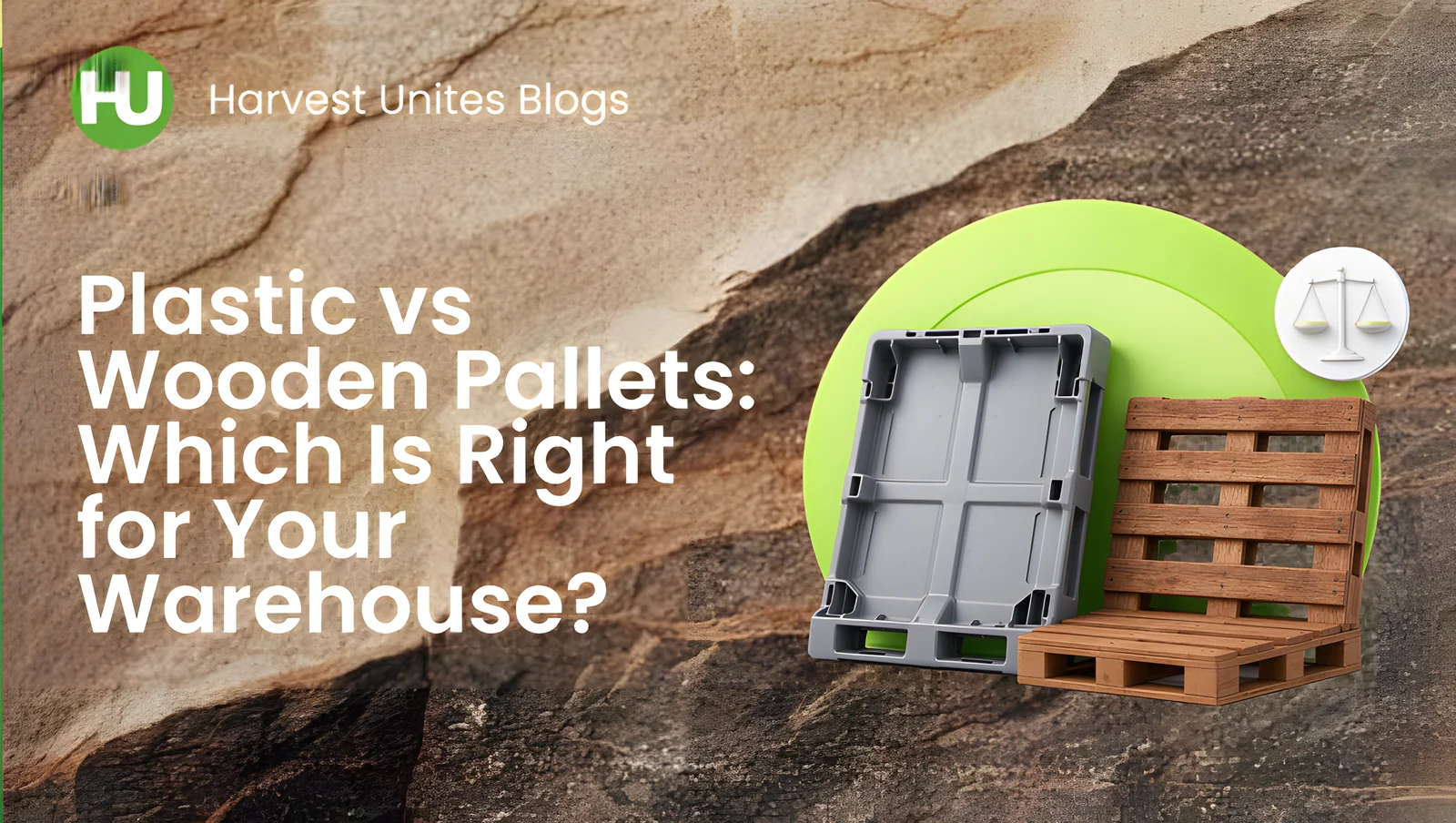
Pallets are so common in Malaysian warehouses that they are easy to overlook. Yet the pallet under your goods affects almost everything that happens to them: how safely they are lifted, how cleanly they are stored, how well they survive the journey by lorry or container, and how much you spend on handling over the course of a year. Choosing between plastic and wooden pallets is one of the most practical decisions a warehouse manager, factory owner or logistics team can make.
Both types have clear strengths, and neither is the right answer for every operation. This guide compares plastic and wooden pallets on cost, load capacity, hygiene, moisture resistance, weight, repairability, recycling and export rules, and explains when new or used pallets make sense. By the end, you should be able to match the pallet to your goods, your handling equipment and your budget with confidence.
Why Your Pallet Choice Matters
A pallet is more than a platform. It is the interface between your product and every forklift, pallet jack, rack and lorry bed it meets. A pallet that cracks, warps or absorbs water can drop a load, contaminate a product or jam an automated line. A pallet that is over-specified for the job ties up money that could be used elsewhere.
The right choice depends on a handful of questions:
- What are you carrying, and how heavy is each loaded pallet?
- Will the pallet stay inside your warehouse, travel to customers, or leave the country?
- Does your product have hygiene requirements, such as food, beverages or pharmaceuticals?
- Is your storage area dry, or exposed to water, washdowns or outdoor humidity?
- Do pallets come back to you, or are they a one-way cost?
Keep your answers in mind as you read through the comparison below.
Wooden Pallets at a Glance
Wooden pallets are the traditional workhorse of warehousing and logistics. The wooden pallets we supply are made from natural hardwood and measure 1200 mm × 1000 mm × 140 mm, with 20 mm standard board thickness. They are rated for a 1000 kg dynamic load (while being moved) and a 3000 kg static load (when resting on the floor or stacked).
- Lower upfront cost: wooden pallets generally cost less to buy than plastic pallets, which matters when you need large quantities or pallets that may not come back.
- Repairable: a broken board can be removed and replaced, extending the life of the pallet.
- High friction: the natural timber surface grips loads, so bags, cartons and drums are less likely to slide.
- Recyclable: old timber can be reused, repaired or recycled at the end of its working life.
- Limitations: wood can absorb moisture, may develop mould in damp storage, can splinter, and needs heat treatment for many export destinations.
Plastic Pallets at a Glance
Plastic pallets are moulded rather than nailed together, which gives them a uniform shape and a smooth, sealed surface. Our plastic pallets are moulded from virgin HDPE and measure 1200 mm × 1000 mm × 150 mm. They carry a 1500 kg dynamic load and a 4000 kg static load, higher than our standard wooden pallet.
- Hygienic: the surface is easy to wash and sanitise, making plastic pallets popular in food, beverage and pharmaceutical storage.
- Moisture-proof: plastic does not absorb water, rot or grow mould, even in humid conditions or cold rooms.
- Consistent: every pallet has the same size and weight, which suits automated handling and tidy racking.
- Long life: plastic pallets can last many cycles in returnable and closed-loop logistics.
- Limitations: a higher purchase price, a smoother surface that may need anti-slip measures for some loads, and damage that usually cannot be repaired the way a timber board can.
Side-by-Side Comparison
Here is a quick comparison of our standard wooden and plastic pallets, using the specifications from our product pages:
- Size: wooden 1200 × 1000 × 140 mm; plastic 1200 × 1000 × 150 mm
- Material: wooden, natural hardwood; plastic, virgin HDPE
- Dynamic load: wooden 1000 kg; plastic 1500 kg
- Static load: wooden 3000 kg; plastic 4000 kg
- Upfront cost: wooden lower; plastic higher
- Hygiene: wooden harder to clean thoroughly; plastic easy to wash and sanitise
- Moisture: wooden can absorb water and grow mould; plastic does not absorb water or rot
- Repairs: wooden boards can be replaced; plastic damage is usually not repairable
- Load grip: wooden high friction; plastic smoother surface
- Export: wooden needs ISPM 15 heat treatment for many countries; plastic is not wood packaging, so ISPM 15 does not apply
- Condition: both available new or used
Key Factors to Weigh for Your Warehouse
The comparison list is a useful starting point, but each factor carries a different weight depending on your operation. Let us look at the most important ones in more detail.
Cost and Return on Investment
Wooden pallets win on purchase price. If your pallets leave with customers and rarely return, or if you need a large number for short-term storage, wood keeps your outlay low. Plastic pallets cost more at the start, but in a closed loop, where the same pallets circulate between your sites or between you and a regular customer, their longer working life can spread that cost over many more trips. The real question is not "which is cheaper to buy?" but "which is cheaper per trip in my operation?"
Load Capacity
Both pallets handle typical warehouse loads, but there is a clear difference on paper. Our wooden pallet is rated for 1000 kg dynamic and 3000 kg static, while our plastic pallet is rated for 1500 kg dynamic and 4000 kg static. If your loaded pallets are regularly close to 1000 kg while being moved by forklift or pallet jack, the plastic pallet gives you a more comfortable margin. Always keep within the rated capacity, spread the load evenly, and remember that racking can place different demands on a pallet than floor storage, so check that your pallet and racking setup suit each other.
Hygiene and Cleanliness
For food processing, beverages, pharmaceuticals and other hygiene-sensitive goods, plastic pallets have a strong advantage. Their sealed surface can be washed down and sanitised, and they do not shed splinters or fibres. Timber is porous, so it can hold dirt, liquids and odours that are difficult to remove completely. Wooden pallets remain perfectly suitable for bagged goods, building materials, drums and boxed industrial products where strict hygiene is not required.
Moisture and Malaysia's Humid Climate
Malaysia's heat and humidity are hard on natural materials. Wooden pallets stored in damp corners, outdoors or near washdown areas can absorb water, which adds weight, weakens the timber over time and can lead to mould. Plastic pallets do not absorb water, rot or grow mould, so they are well suited to cold rooms, wet environments and open-sided storage. If you choose wood, store empty pallets off the ground in a dry, ventilated area, and allow wet pallets to dry before loading them with moisture-sensitive goods.
Weight and Handling
Pallet weight affects manual handling, fuel use and how many pallets your staff can move comfortably. Wooden pallets vary slightly from one to the next depending on the timber and its moisture content, and a damp wooden pallet is noticeably heavier than a dry one. Plastic pallets are consistent in size and weight, which is why they are favoured for automated systems and conveyors. Ask your supplier for the actual unit weight of the model you are considering and factor it into your handling plans.
Repairability and Lifespan
A wooden pallet with a cracked board does not have to be thrown away; the damaged board can be replaced and the pallet returned to service. That makes wood forgiving in rough environments where forklift impacts are common. Plastic pallets resist everyday knocks and last many cycles, but if one is cracked or broken it usually needs to be replaced rather than repaired. Inspect both types regularly and remove damaged pallets from use before they cause an accident.
Export Rules and ISPM 15
If your goods are going overseas, the pallet choice becomes a compliance question as well as a practical one. Many countries require wood packaging, including pallets, to meet the ISPM 15 standard. In practice, this means the timber must be treated, commonly by heat treatment, and stamped with the recognised mark before it is shipped, to reduce the risk of carrying pests across borders.
Follow these steps when shipping on pallets:
- Confirm the destination's rules: requirements vary by country, so check with your freight forwarder or buyer before you pack.
- Use heat-treated, stamped wooden pallets: if you ship on wood, make sure the pallets carry the ISPM 15 mark. Ask us about heat-treated pallets and tell us your destination.
- Consider plastic pallets: because ISPM 15 applies to wood packaging, plastic pallets fall outside its scope, which can simplify paperwork for some shipments.
- Check condition before loading: export pallets should be clean, dry and undamaged, since a broken pallet inside a container is difficult to deal with at the other end.
- Plan for one-way trips: export pallets often do not come back, so weigh the higher cost of plastic against the lower cost of wood for these shipments.
New vs Used Pallets
Both wooden and plastic pallets are available new or used, and choosing the right condition is a simple way to control costs without compromising safety.
- New pallets suit export shipments, customer-facing deliveries and any application where appearance and a full service life matter.
- Used wooden pallets are an economical choice for internal storage and local transport, where a few marks on the timber make no difference to performance.
- Used plastic pallets offer the same hygiene and moisture benefits as new ones at a lower price, making them ideal for internal storage and general warehouse use.
- Inspection matters: whichever you buy, check used pallets for cracked or missing boards, protruding nails, deep cracks in plastic decks and contamination from previous loads.
Buying used pallets also extends the life of existing materials, which supports more sustainable industrial packaging practices. At the end of their life, timber can be reused or recycled, and plastic pallets can be sent for plastic recycling instead of landfill.
Which Pallet Fits Your Operation?
To bring it all together, here is how the choice usually plays out for common warehouse scenarios in Malaysia:
- Bagged goods such as fertiliser, rice and animal feed: wooden pallets are a cost-effective choice, and their high-friction surface helps keep stacked bags stable.
- Drums and IBC tanks: wooden pallets commonly carry four drums each; for heavier or wet loads, plastic pallets give extra capacity and resist spills. Our guide to storing and transporting wooden pallets and industrial drums covers this in more detail, and you can also browse our 220L HDPE plastic drums.
- Food, beverage and pharmaceutical storage: plastic pallets, for their washable, non-absorbent surface.
- Cold rooms, wet areas and humid open storage: plastic pallets, which will not rot or grow mould.
- Export shipments: ISPM 15 heat-treated wooden pallets for cost-sensitive one-way loads, or plastic pallets where wood packaging rules are a concern.
- Closed-loop and returnable logistics: plastic pallets, whose long life spreads the higher purchase price over many trips.
- Short-term or internal storage on a budget: used wooden or used plastic pallets, depending on your hygiene and moisture needs.
Many warehouses end up using both: plastic pallets for hygienic or wet areas and returnable routes, and wooden pallets for general storage, bagged goods and outbound shipments.
Frequently Asked Questions
Are plastic pallets stronger than wooden pallets?
Based on our standard models, yes. Our plastic pallet is rated for 1500 kg dynamic and 4000 kg static load, compared with 1000 kg dynamic and 3000 kg static for our wooden pallet. Both are strong enough for many everyday warehouse loads when used within their ratings.
Which pallet is better for Malaysia's humid weather?
Plastic pallets handle humidity better because they do not absorb water, rot or grow mould. Wooden pallets perform well too when they are kept dry, stored off the ground and allowed to dry out before reuse.
Do I need heat-treated pallets for export?
Many countries require wooden pallets to meet ISPM 15, which means heat-treated and stamped. Check your destination's requirements, and tell your supplier where the goods are going so they can advise on suitable pallets. Plastic pallets are not wood packaging, so ISPM 15 does not apply to them.
Are used pallets safe to use?
Yes, provided they are inspected and in good condition. Used pallets are an economical choice for internal storage and local transport. Reject any with broken boards, protruding nails, cracked decks or signs of contamination.
Key Takeaways
Wooden pallets offer a lower upfront cost, high load grip and easy repairs, making them a dependable choice for general warehousing, bagged goods and cost-sensitive shipments, provided you store them dry and use ISPM 15 heat-treated pallets for export. Plastic pallets cost more at the start but bring higher rated capacity, easy cleaning, resistance to moisture and a long life in returnable systems.
The best pallet is the one that matches your goods, your environment and how far your pallets travel. Weigh cost per trip rather than purchase price alone, consider used pallets for internal work, and do not hesitate to mix both types across your warehouse. With the right pallet under every load, you protect your products, your people and your budget.